What Actually Happens During an Emergency Tree Health Check
Quick Answer: An emergency tree health check is a focused, same-day inspection an arborist performs after a storm, lightning strike, or sudden tree failure to determine whether a tree is stable, needs monitoring, or has to come down. The arborist walks the canopy, trunk, and root zone looking for cracks, hanging limbs, soil heaving, and decay that a homeowner would likely miss from the ground. A tree can look completely fine from the porch and still be carrying damage that fails weeks or months later, which is why the check happens on site rather than over the phone.
The storm rolls through overnight, and by morning the yard looks mostly normal. A few small branches scattered on the lawn, maybe a bent shrub, nothing that looks like an emergency. Then a neighbor mentions their oak came down two weeks after a storm that seemed to leave it untouched, and the question starts nagging at you: how do you actually know a tree is fine, versus a tree that is quietly failing where you can't see it?
That question is exactly what an emergency tree health check answers. It is not a glance from the driveway or a guess based on how green the leaves still look. It is a structured inspection built around one goal: catching the damage that isn't obvious before it becomes the damage that is.
Why a Tree Can Look Fine and Still Be a Hazard
Most storm damage that matters is not the branch lying in the yard. It's the damage nobody can see from a distance.
Root Plate Movement
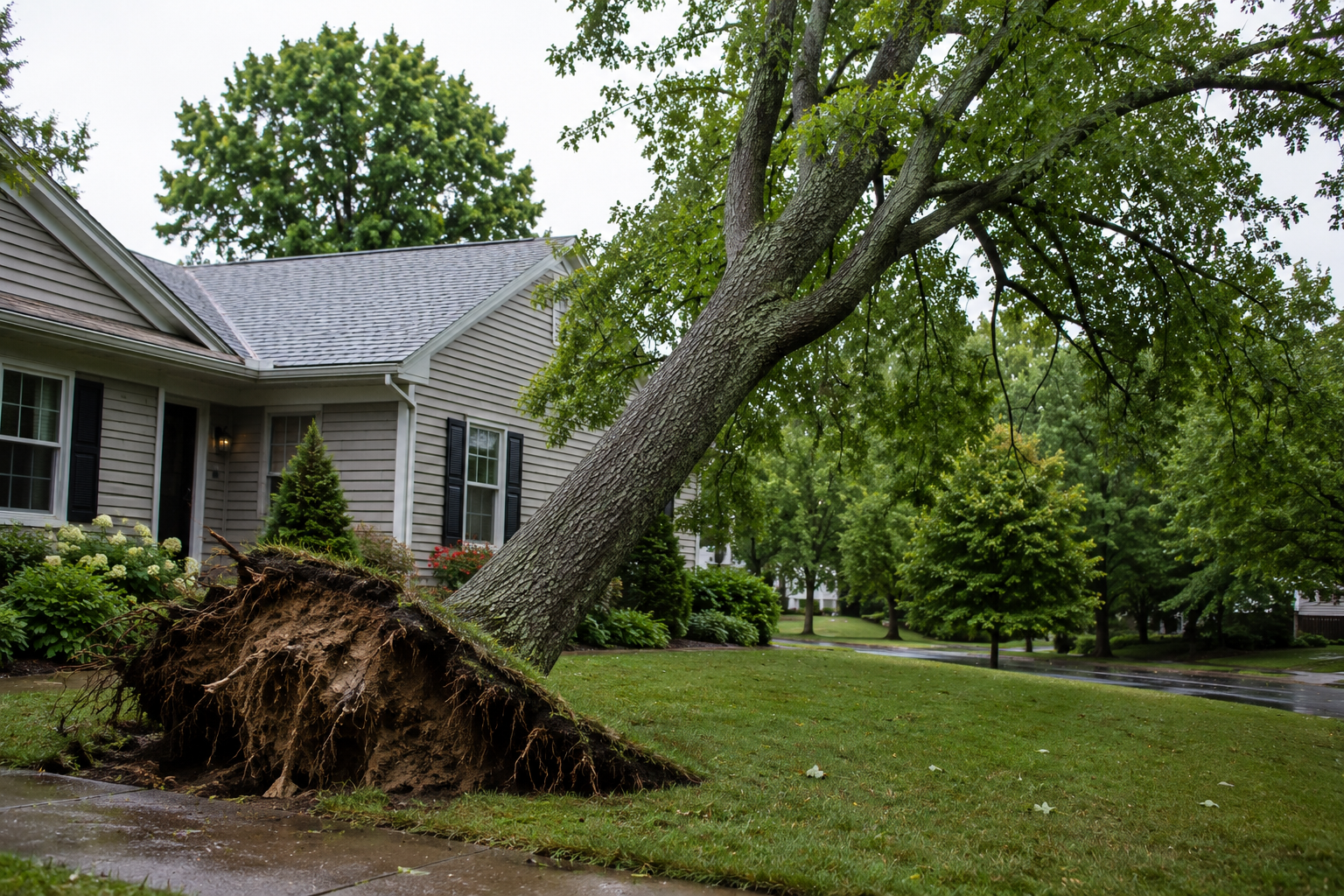
Sustained wind can shift a tree's root plate without tearing it enough to produce a visible lean right away. The soil settles back into place over a day or two, and the tree looks upright again, even though the anchoring roots underneath are compromised.
Internal Trunk Cracks
A trunk can develop a vertical crack from wind stress or a lightning strike that runs several feet down the wood without ever showing on the bark surface. Arborists sometimes find these only by sounding the trunk or using tools built for the job.
Delayed Decline From Lightning
A struck tree can appear entirely normal for months. The strike opens the tree to fungi and boring insects, and the real failure shows up as canopy dieback well after the storm that caused it is forgotten.
Hung, Hidden Limbs
A cracked branch that doesn't fall right away can stay lodged in the canopy under tension, ready to drop with no warning on the next breeze.
None of these show up in a walk-by. They show up when someone who knows what to look for gets close to the trunk, the crown, and the ground at the base.
What Happens During the Inspection
An emergency tree health check moves through the tree in a specific order, from the ground up.
Ground And Root Zone
The arborist checks the soil around the base for heaving, cracking, or a gap where the trunk meets the ground, all signs that the root plate shifted. Mushrooms or conks near the root collar get flagged too, since fungal growth at the base often points to decay that was already weakening the tree before the storm.
Trunk
Next comes a close look for cracks, splits, and exposed wood. Vertical cracks can indicate lightning damage or freeze stress, while horizontal cracks tend to signal that the wood itself is starting to fail structurally. Bark that has been peeled back by wind or debris gets checked too, since a fresh wound reveals whether the trunk was already carrying hidden decay.
Crown And Canopy
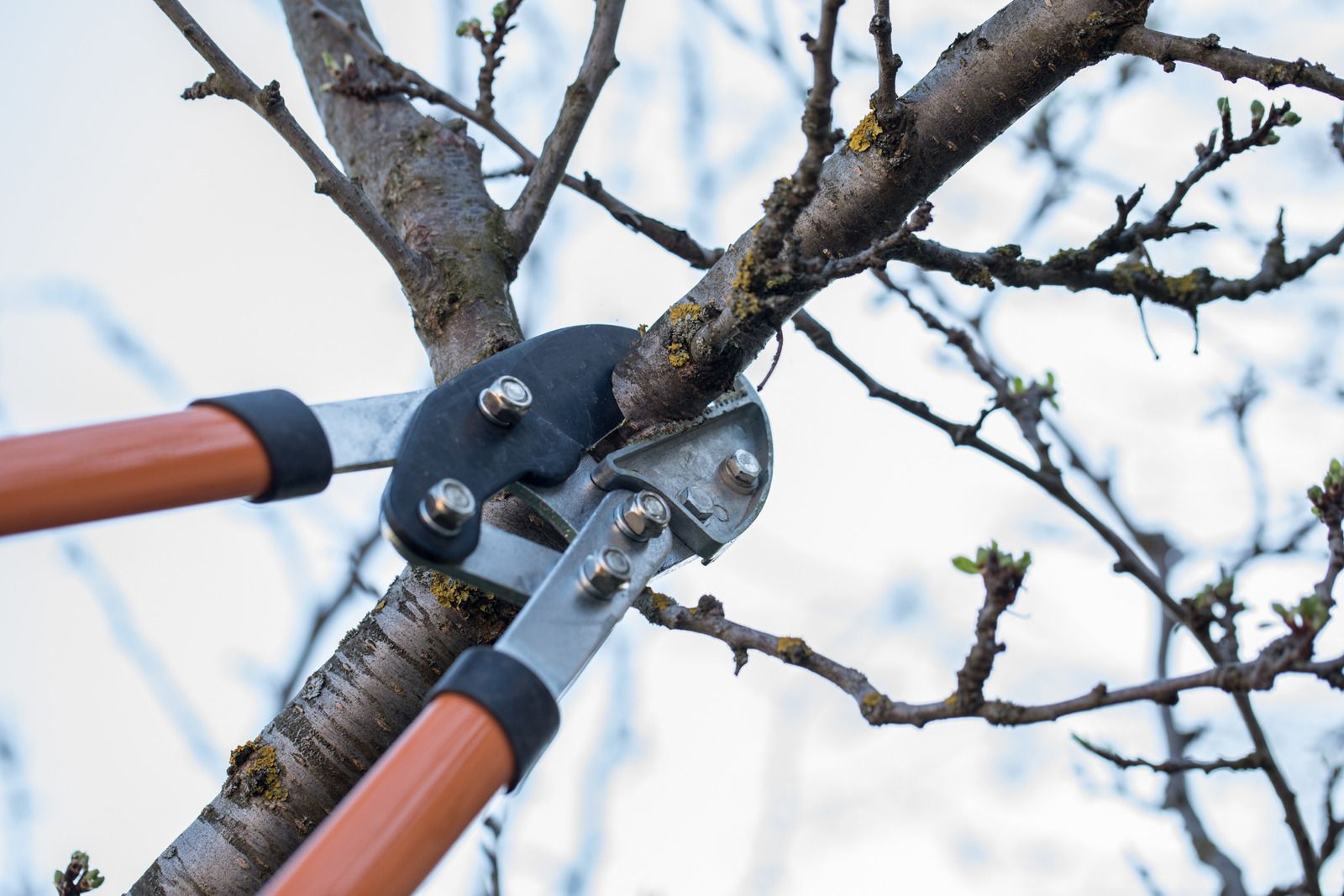
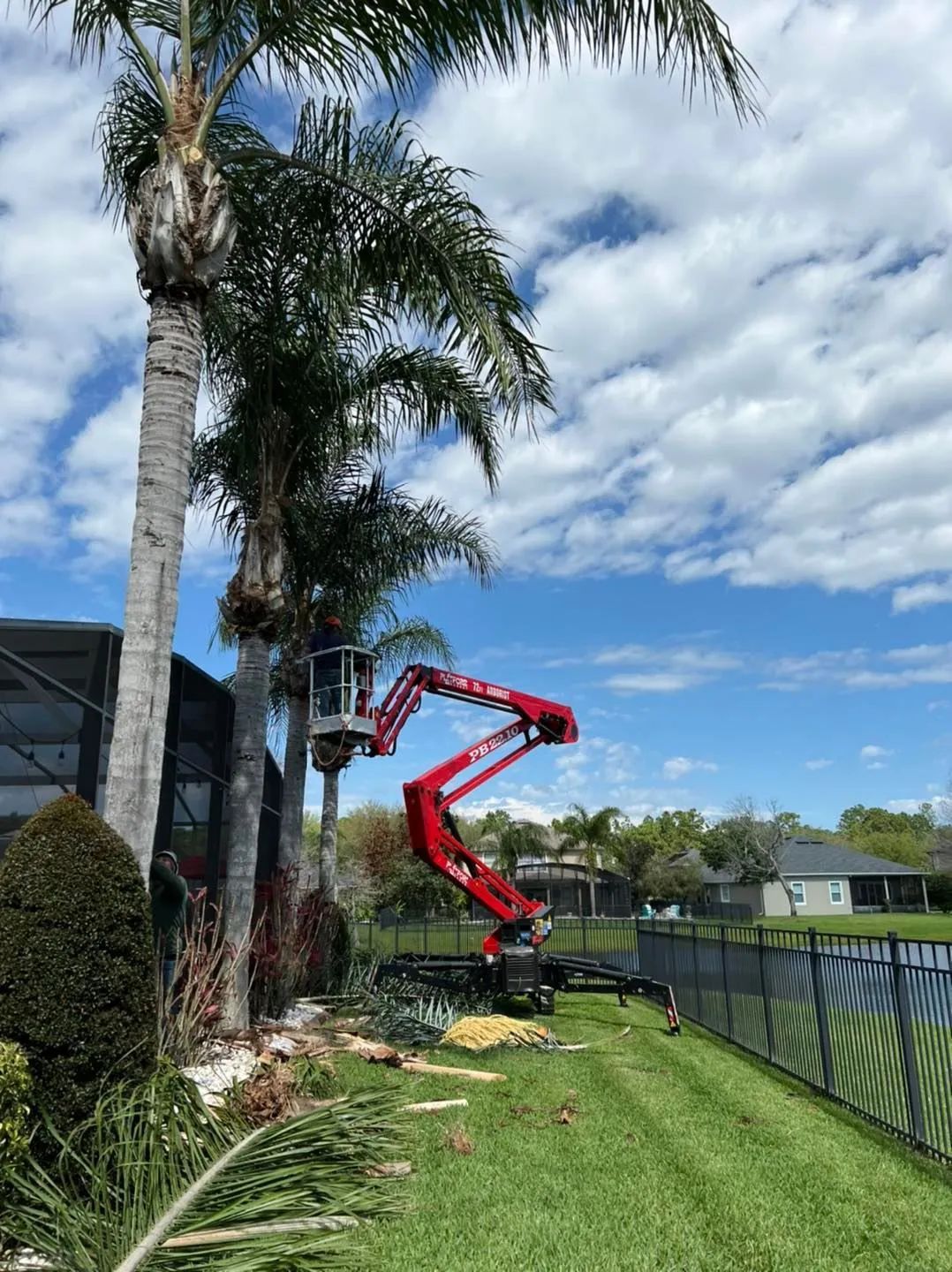
The arborist looks up through the branch structure for hung or broken limbs still caught in the tree, cracked unions where large branches meet the trunk, and any deadwood loosened by the wind. Branch unions that form a tight, V-shaped angle are watched closely, since that shape is inherently weaker than a wide, U-shaped union and more likely to split under load.
Overall Lean And Stability
If the tree is leaning, the arborist compares it against what a healthy lean should look like: gradual, long-standing, and paired with undisturbed soil at the base. A fresh lean, or one paired with any of the root signs above, gets treated as an active structural concern rather than a cosmetic one.
For damage that isn't visible from the outside, some inspections call for more than a visual check. Tools that measure trunk density or map internal cavities let an arborist confirm what's happening inside the wood rather than guessing from surface clues, which matters most on large, high-value trees near a house or a spot where people gather.
Tip: Take dated photos of any leaning, cracked, or damaged trees from the same spot over the following days. A tree that holds steady in your photos is one data point. A tree that visibly shifts between photos is a different situation, and having that record on hand helps the arborist gauge how fast things are moving when the check happens.
How the Results Turn Into a Decision
A health check isn't complete until it produces an answer, and that answer usually falls into one of three categories.
Clear
The tree shows normal storm stress (a few broken twigs, some leaf loss) with no structural red flags. No action needed beyond routine cleanup.
Monitor
The tree has a condition worth watching (a lightning strike with no visible decline yet, a borderline lean, early decay at the base) but nothing that demands immediate removal. These trees typically get a follow-up check in the months ahead rather than an urgent call.
Address Now
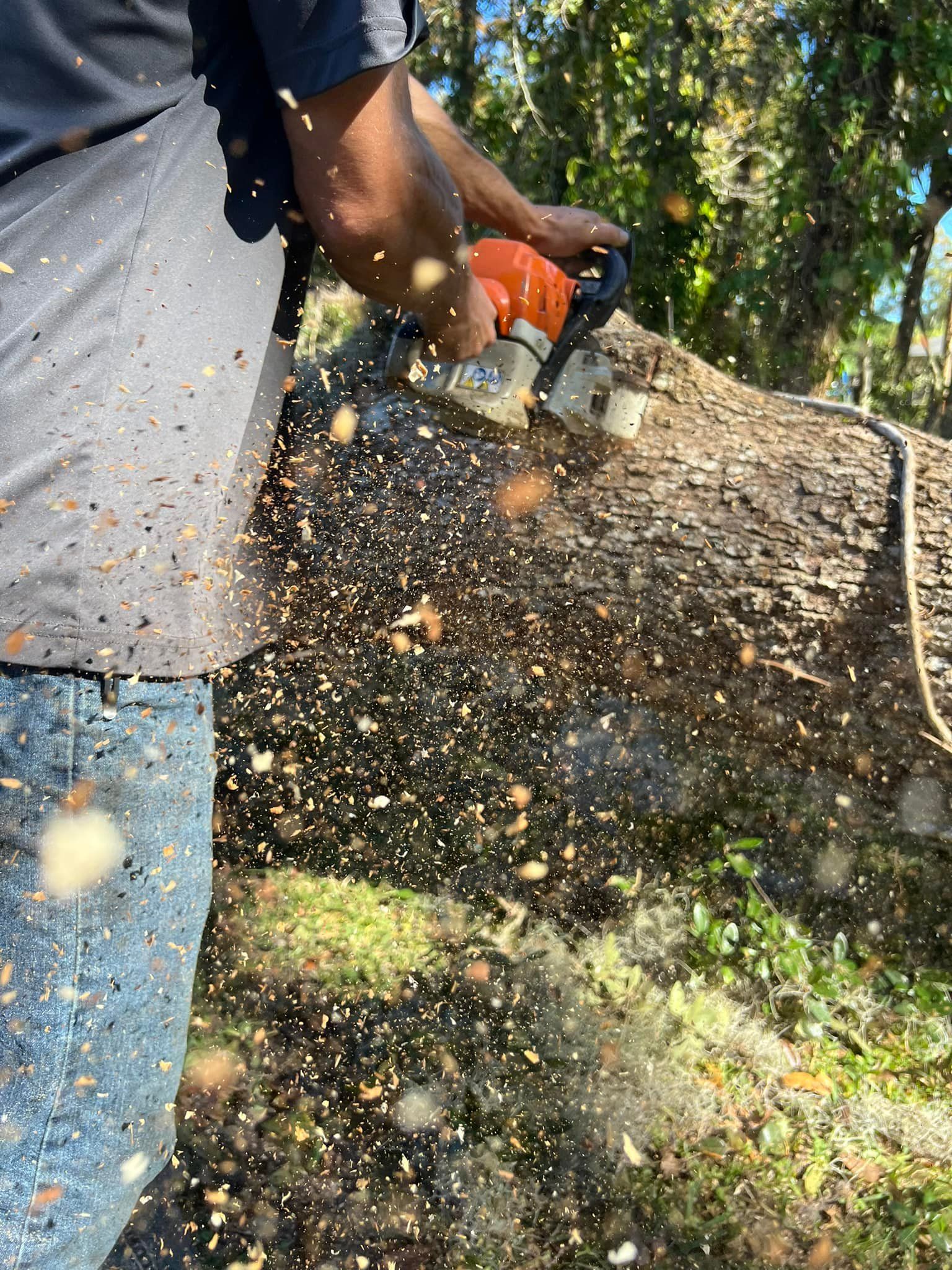
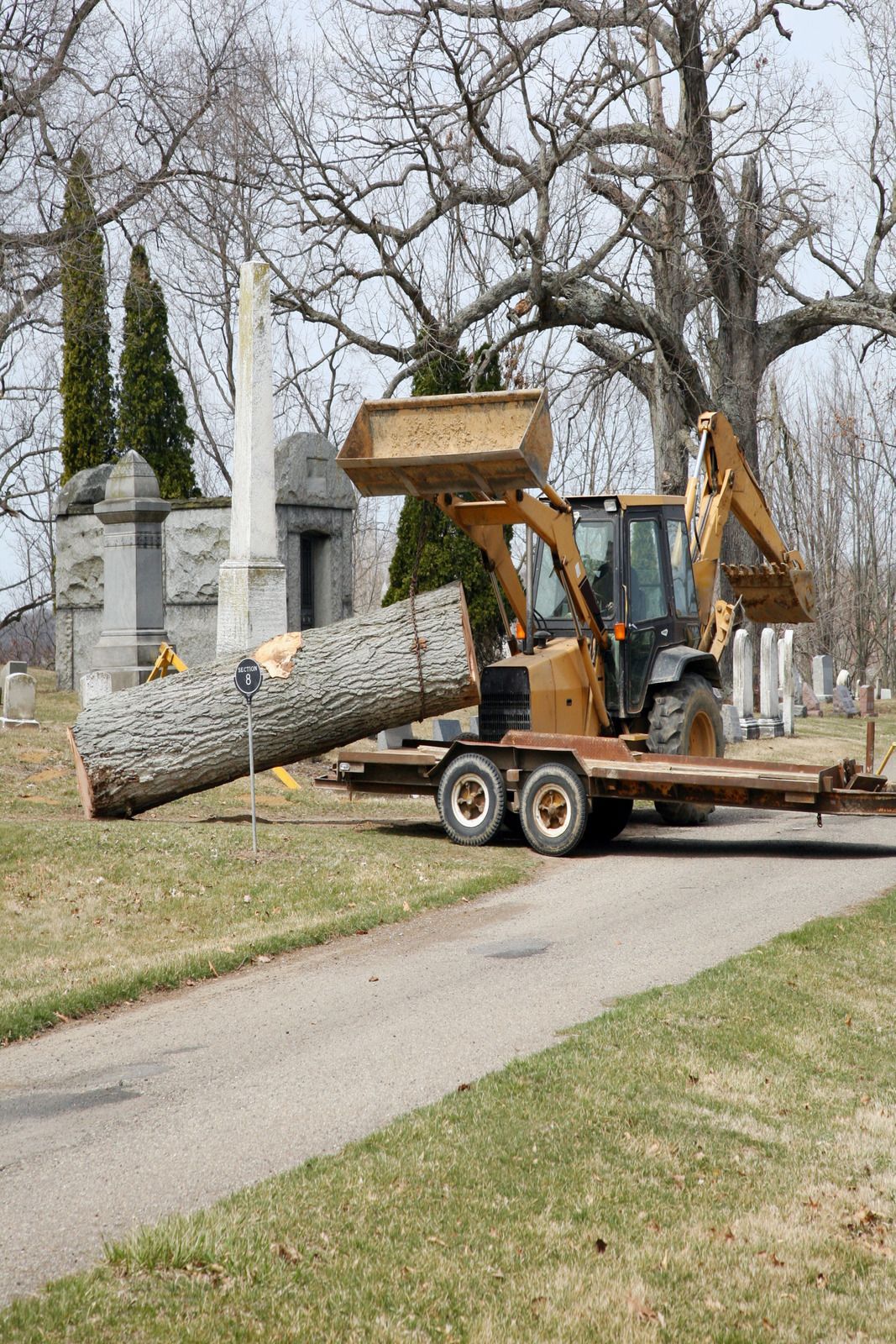
The tree has a confirmed structural failure such as a torn root plate, a trunk crack, or a hung limb over something that matters, and the arborist recommends pruning, bracing, or removal before the next storm tests it again.
That third category also weighs what the tree is pointed at. A defect over an open lawn carries a different level of concern than the same defect over a driveway, a bedroom window, or a spot where people regularly gather. The decision isn't only about how damaged the tree is. It's about what happens if the damage finishes the job.
Why This Matters More in Central Florida
Winter Springs and the rest of Central Florida sit on sandy, fast-draining soil with a high water table, and that combination changes how storm damage plays out here. Sandy ground holds a root plate less firmly than heavy clay, and the region's summer rains keep that soil saturated for days at a time, right when tropical systems and thunderstorm winds are strongest. A root system that would stay put in drier, denser ground can lose its grip here after a single hard storm.
Central Florida also sees a high volume of lightning strikes each summer, which raises the odds that a tree carrying hidden strike damage is sitting in your yard right now without an obvious mark on it. Between saturated soil loosening roots and lightning opening trunks to slow decay, the two most common causes of the "tree that looked fine and then didn't" scenario are both regular occurrences here, not rare exceptions.
When to Schedule the Check
Timing depends on what triggered the concern. A tree with a hung limb over a driveway, a fresh lean toward the house, or visible root heaving needs a same-day look, since those conditions can progress or fail without further warning. A tree that took a lightning strike but shows no visible distress can usually wait for a scheduled visit, though it's worth having on the calendar since strike damage tends to surface as canopy decline over the following months rather than right away.
Either way, the check should happen before anyone gets close to a damaged tree to clean up debris or remove branches. What looks like a simple cleanup job can involve a limb still under tension or a compromised trunk that isn't stable enough for that work yet.
Frequently Asked Questions
How long does an emergency tree health check take?
Most single-tree inspections take 20 to 40 minutes on site, depending on the tree's size and how many concerns need a closer look. A property with several trees to check will run longer.
Do I need a health check if the tree wasn't directly hit by anything?
Yes, if it was exposed to sustained wind or sat in saturated soil during the storm. Root plate movement and trunk stress don't require a direct hit. Wind load alone is often enough to compromise a tree that never lost a single branch.
Can a tree pass a health check and still fail later?
It's uncommon but possible, particularly with lightning damage that develops slowly. That's part of why borderline trees get flagged for monitoring rather than a one-time clearance, so any delayed decline gets caught on a follow-up visit.
Is it safe to wait a few days before getting a leaning or cracked tree checked?
Not if the tree is near a structure, driveway, or anywhere people spend time. A lean or crack that's progressing can fail with little additional warning, so trees pointed at a target should be assessed as soon as it's safe to approach them.
What should I do before the arborist arrives?
Keep people, pets, and vehicles clear of the tree and anything it could fall on, especially near power lines. Don't attempt to move fallen limbs or cut into a damaged trunk yourself, and take photos of the damage if it's safe to do so.
Does insurance require a professional assessment after storm damage?
Many insurers ask for documentation of storm-related tree damage before covering removal or repair costs, and a written assessment from a professional carries more weight than photos alone. Check with your carrier, but it's worth having the report on hand either way.
Reading a Tree's Damage Before It Reads You
A storm's aftermath rarely tells the full story from the yard. The branches on the lawn are the least of it; what matters is the root plate that shifted underground, the crack running through wood that never broke the bark, the strike that hasn't shown itself yet. An emergency tree health check exists because guessing isn't a strategy when a tree is involved, and because the difference between a tree that's fine and one that's failing often comes down to details only a trained eye catches up close.
Central Florida's sandy soil and lightning-heavy summers make that closer look worth having, since both conditions tend to hide damage rather than announce it. Better Than The Rest Arboriculture and Landscape, LLC
has spent 15
years learning how trees in Winter Springs, FL respond to exactly this kind of stress, from a fresh lean to a strike that hasn't surfaced yet. Knowing which category a tree falls into, clear, monitor, or address now, is what turns uncertainty into a plan worth trusting.